-
Centre of
Excellence
Centre of Excellence
- Cardiology
- Cardiothoracic Vascular Surgery
- Dialysis
- Gastrointestinal Science
- Laparoscopic Surgery
- Liver Transplantation Surgery
- Nephrology
- Neurology
- Neurosurgery
- Obstetrics and Gynaecology
- Organ Transplant
- Orthopaedic Robotic Surgery
- Orthopaedics
- Paediatric And Child Care
- Proctology
- Rheumatology
- Spine Care
- Urology
Other Specialities
- Allergy and Immunology
- Anesthesiology Department
- Bariatric Surgery | Weight loss surgery
- Bone Marrow Transplantation
- Children’s Airway & Swallowing Centre
- Clinical Psychology
- Dental Medicine
- Dermatology
- Diabetes and Endocrinology
- dummy test
- Ear Nose Throat
- Electrophysiology
- Fetal Medicine
- General Medicine
- General Surgery
- Genetics
- Geriatric Medicine
- GI Surgery
- Growth and Hormone
- Gynaec Oncology
- Hand and Upper Limb Surgery
- Hand Surgery
- Hemato Oncology
- Hematology
- Hepatobiliary Surgery
- ICU and Critical Care
- Infectious Disease
- Internal Medicine
- Interventional Radiology
- IVF and Infertility
- Kidney Transplant
- Laboratory Medicine
- Lactation
- Medical Gastro
- Medical Oncology
- Microbiology
- Minimal Access Surgery
- Neonatology & NICU
- Neuro Otology
- Nuclear Medicine
- Nutrition And Dietetics
- Ophthalmology
- Oral Maxillo Facial Surgery
- Paediatric Cancer Care
- Paediatric Cardiology
- Paediatric Endocrinology
- Paediatric General Surgery
- Paediatric Infectious Disease
- Paediatric Intensive Care Unit
- Paediatric Neurology
- Paediatric Surgery
- Paediatric Urology
- Pain Medicine
- Parkinson Disease and Movement Disorder
- Pathology
- Pediatric Bone Marrow Transplant
- Pharmacy
- Physical Medicine and Rehabilitation
- Physiotherapy
- Plastic And Cosmetic Surgery
- Podiatric Surgery
- Psychiatry
- Psychology
- Pulmonology (Respiratory and Sleep Medicine)
- Radiology
- Radiotherapy (Oncology Radiation)
- Rehabilitation Medicine
- Renal Sciences
- Reproductive Medicine
- Robotic Assisted Surgery
- Senior Care Program
- Sports Medicine
- Surgical Gastro
- Surgical Oncology
- Thoracic Surgery
- Transfusion Medicine
- Trauma Care
- Vascular and Endovascular Surgery
- Women and child care centre
Speciality Clinics
- Attention Deficit Hyperactivity Disorder (ADHD) Clinic
- Breast Cancer Clinic
- Cystic Fibrosis Clinic
- Epilepsy Clinic
- Fibroid Clinic
- Hair Transplantation Clinic
- Healthy Weight Clinic
- Heart Care Clinic
- Lifestyle Clinic
- Liver Clinic
- Lymphedema Clinic
- Neuromuscular Clinic
- Varicose Veins Clinic
- Vitiligo Clinic
- Doctors
- EM Bypass
-

Bengaluru

-
-

Bhubaneswar
-
Bhubaneswar
-
-

Delhi - NCR
-

Goa
-
Goa
-
-

Jaipur
-

Kolkata
-

Mangaluru
-

Mysuru
-

Patiala
-

Pune
-

Ranchi
-

Salem
-

Siliguri City
-
Vijayawada
- International Patients


Clinics
 Search
- Self Registration
- In-Patient Deposit
- Mars - Ambulance
- Corporate & PSU
- Insurance Helpdesk
- Awards And Achievements
- Careers
- Contact Us


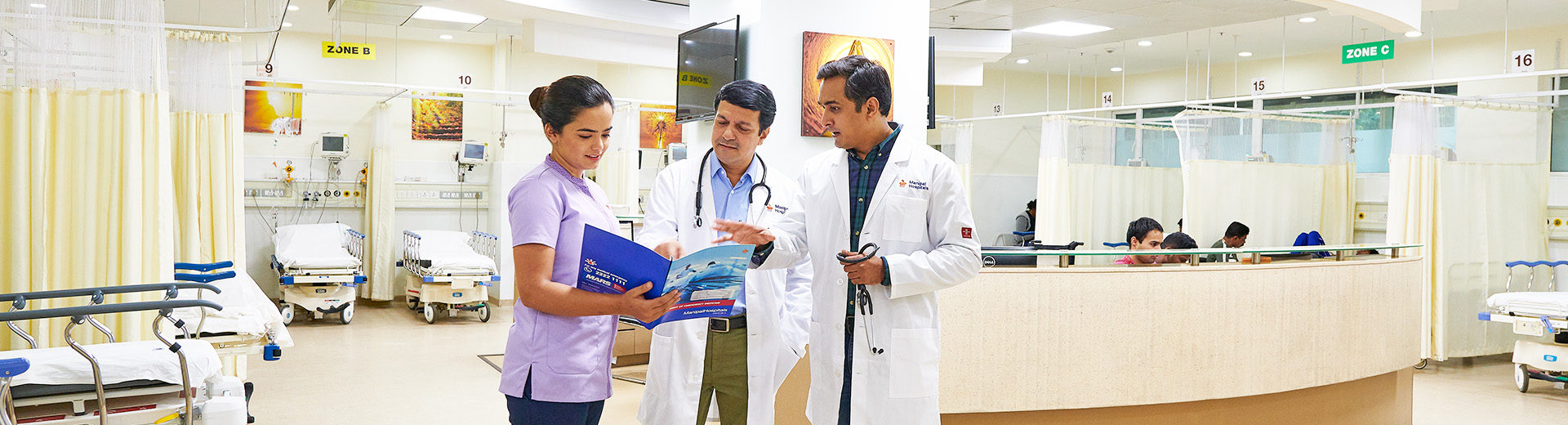
Emergency Percutaneous Coronary Intervention (PCI)
Emergency PCI in EM Bypass, Kolkata | Heart Attack Treatment
Why is it Done?
This is advised for the following conditions:
-
Acute heart attack (STEMI or NSTEMI)
-
Persistent chest pain (angina) that does not respond to medication
-
Sudden blockage of a coronary artery confirmed on ECG or angiogram
-
Life-threatening rhythm disturbances due to blocked arteries
-
Cardiogenic shock caused by poor blood flow to the heart muscle
At Manipal Hospitals, Emergency Cardiac Catheterisation in EM Bypass, Kolkata is performed with urgency and precision to quickly open blocked arteries, minimise damage to heart muscle, and improve survival rates.
Pre-Procedure
Patients are educated in advance about the procedure, including what to expect and how to prepare. Preparation typically involves fasting for a few hours and temporarily stopping anticoagulant medications. A Coronary Angiogram is done for visualisation of blockages and to plan the intervention. The patients' vital signs are also monitored, and an IV line is placed for the administration of drugs.
During Procedure
A tiny cut is made in the wrist, arm, or groin area, through which a thin tube (catheter) is gently threaded up to the blocked artery. Once in place, a balloon at the tip is inflated to open the artery, and a stent is inserted to keep it open. Advanced imaging is used throughout the procedure to ensure precision. The entire process typically takes one to two hours.
Post-Procedure
Patients are checked for post-procedure complications, and they are administered blood clotting medications. Patients are not advised to perform strenuous work and are given special care instructions regarding the catheter's insertion site. Routine follow-ups are required in order to observe the patient's recovery status and the functioning of the stent. Patients are also prescribed a healthy diet and exercise related to the heart to avoid future blockages.
Possible Risks
While generally safe and life-saving, Emergency Cardiac Catheterisation does carry a few potential risks, especially in critical cases:
-
Bleeding or bruising at the catheter insertion site
-
Injury to the artery or heart lining (rare)
-
Heart rhythm problems during or after the procedure
-
Infection, though very uncommon
-
Kidney strain due to the contrast dye, particularly in patients with existing kidney issues
At Manipal Hospitals, we minimise these risks by performing Emergency Cardiac Catheterisation in EM Bypass, Kolkata using advanced equipment, expert monitoring, and strict infection control protocols. Our team ensures that each patient receives timely, precise care to support the safest possible recovery.
Emergency Percutaneous Coronary Intervention is a procedure needed to open up the blocked coronary arteries during a heart attack. A thin catheter with a small balloon at its tip is gently inserted into the blocked artery through a minimally invasive approach. Once in place, the balloon is inflated to open the artery, and in some cases, a stent is placed to help keep it open.
A heart attack can occur when blood flow to a part of the heart is blocked, usually by a blood clot. Emergency Percutaneous Coronary Intervention (PCI) Treatment in EM Bypass, Kolkata, is a critical procedure that quickly restores blood flow and helps minimise damage to the heart muscle.
Home Em-bypass Specialities Cardiology Emergency-percutaneous-coronary-intervention



You’re on Our Indian Website
Visit the Global site for International patient services

Your Feedback is Highly Valued!
'Click' to chat with us